Dayton Ward on Pliable Truths
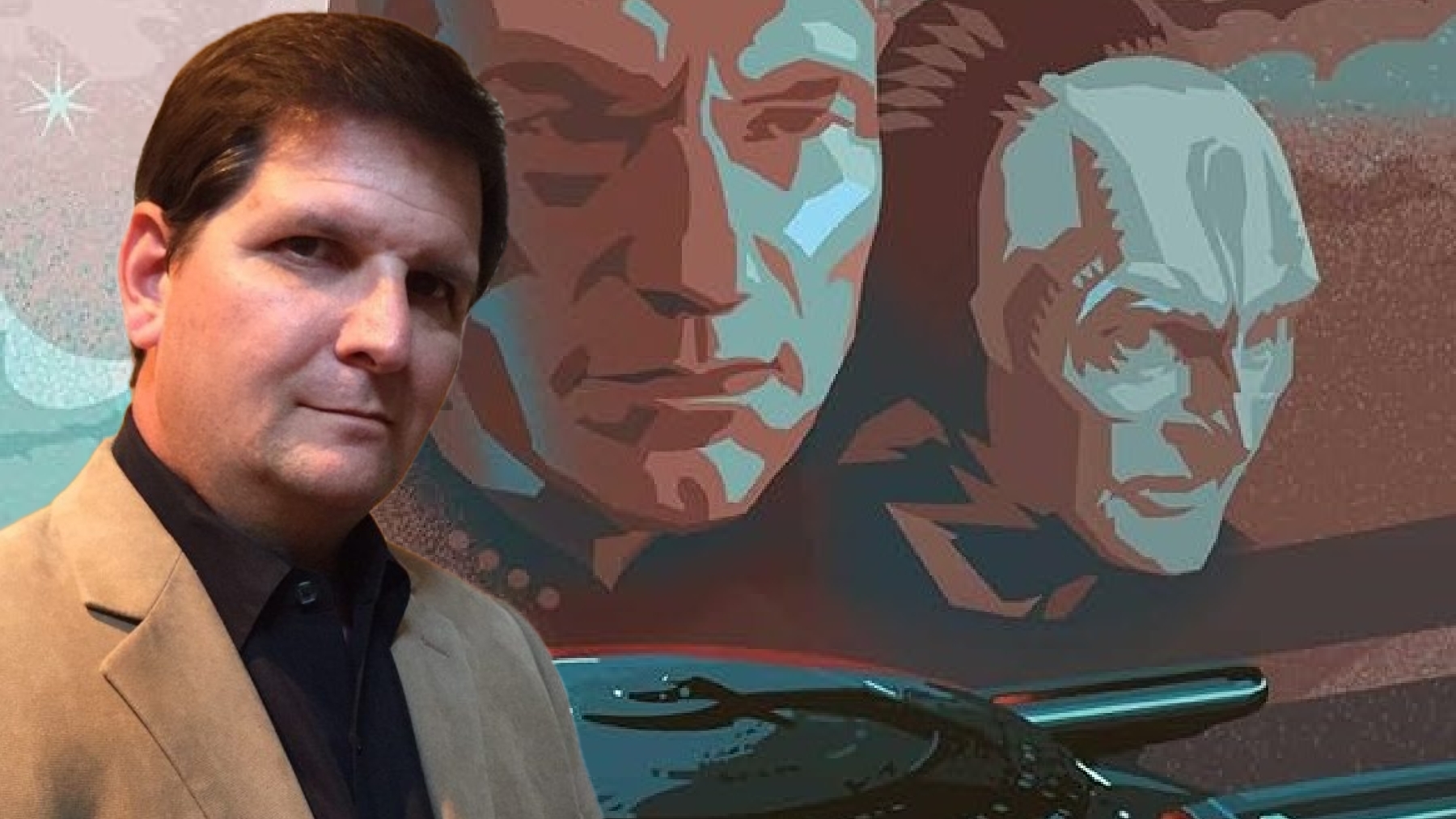
Star Trek fans had an excellent start to their summer with author Dayton Ward’s dive into the worlds of TNG and DS9 in the novel Pliable Truths. Set at the end of the Cardassian occupation of Bajor, Ward had the fun task of creating a story highlighting that tumultuous time. I recently talked to Ward about this novel and other Trek-related topics.
What sparked the idea for Pliable Truths?
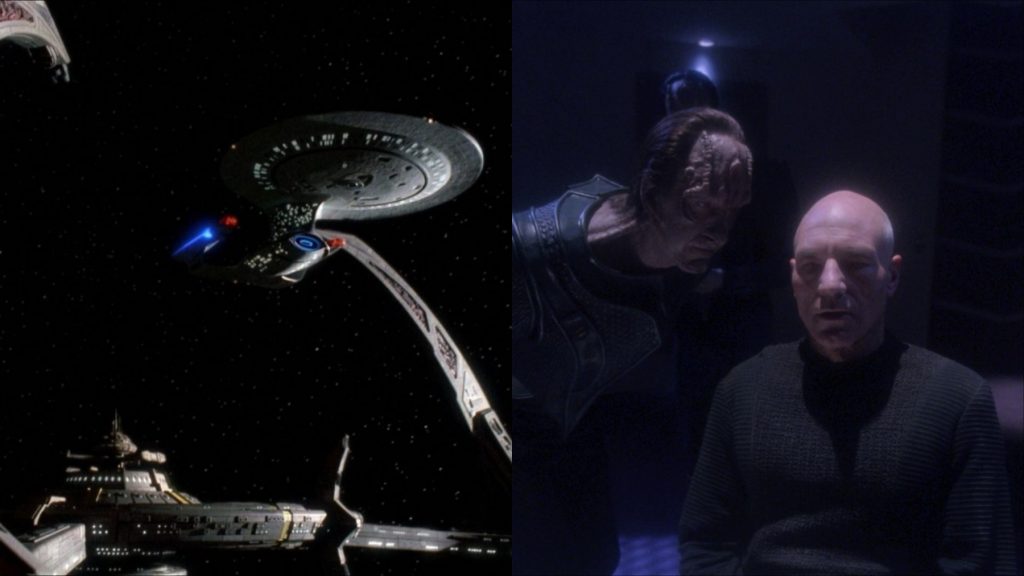
My editors at Simon & Schuster asked me to write a Star Trek: The Next Generation novel set in the time frame of the TV series. They also threw me a curveball by asking it to also be a crossover, of some sort, with Deep Space Nine. Realizing I had a fairly limited period of time in which to operate so far as the overlap between the two TV shows, I quickly zeroed in on the notion of doing something set just before Benjamin Sisko and the other Starfleet characters arrive at the station in the DS9 premiere, “Emissary”. It was a quick jump from there to also take advantage of Picard’s still-recent experience with Gul Madred in the two-part TNG episode “Chain of Command”. Then we were off and running.
How difficult was it to balance the casts from the two shows into your story?
Given the constraints provided by my editors and then my choice of where exactly to place the story, right off the bat it was a challenge to make sure I stuck to what we knew from the episodes. From all the evidence, Worf hadn’t met most if any of the DS9 characters (except the O’Briens, of course) before that show’s events. Even though it’s really a TNG novel with DS9 guest stars, I still wanted to make sure the DS9 characters I did use got their time to shine. That drove the development of the book’s different subplots and scenes with certain characters (and character combinations).
Besides Garak, who was your favorite character to write?
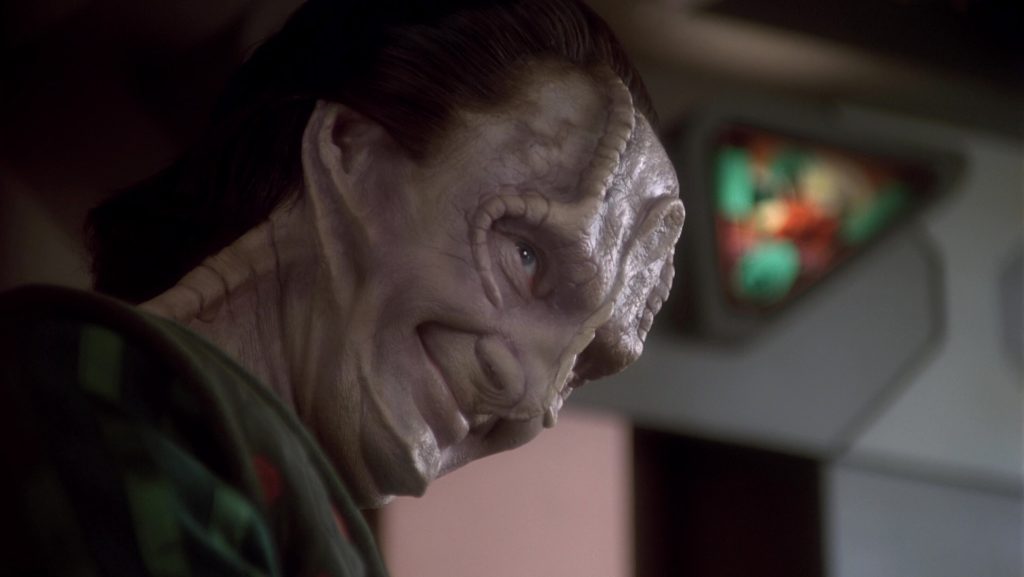
Garak was a treat to write, but my editor rightly cautioned me about writing him too much like “later seasons Garak,” which was how he came off in my original outline. She helped get me on the right track for that.
Otherwise, I’ve always enjoyed writing Picard, and this time around it was fun to sort of “wind back the clock” and write him (and the other Enterprise characters) as he was, on the TV shows. Until this book, I’d largely written him and the rest of the crew in stories set after the TNG movies. This meant catching myself when I occasionally fell into a habit of writing – for example, Picard and Crusher – based on how we portrayed them in those post-movie novels, rather than on the status of their friendship during the show.
How different would your story and DS9 be if it had been Ensign Ro Laren instead of Kira?
The big difference between Ro and Kira is the latter’s backstory as an active participant in the resistance effort during the Cardassian Occupation of Bajor. Ro’s experiences are much different, and based on what we know she largely avoided the sorts of situations Kira endured. It would certainly have changed the dynamic so far as how I partnered Kira with Crusher and Keiko O’Brien for their investigation on Bajor. Ro’s friendship with one of the Bajoran characters I created for the labor camp planet is a key piece to the story, but I would’ve had to come up with a different means of getting her involved with the Enterprise. It would’ve been interesting, that’s for sure!

Is there a reason you didn’t give the labor camp a name?
The camp and even the planet itself was not named deliberately, as a security measure. So far as official records and star charts go, if the planet exists at all then it’s listed as uninhabited/uninhabitable. The Enterprise crew eventually learns the camp is on the third planet of the Satera star system, which is never referred to by anything more than “Satera III”, late in the book.
Were other Star Trek shows utilized in your thoughts while writing this?

I found a way to offer a tip of the hat to Star Trek: Lower Decks, by introducing the USS Oceanside, a ship of the same class as the Cerritos. From the “expanded universe” side of things, I took advantage of that setup to reintroduce a character we’d originally conceived for the novels way back when, albeit with a slightly different spin so that they better fit into this novel, set many years earlier. There’s also a brief nod to the Star Trek Adventures roleplaying game tossed in for flavor, because I get a kick out of doing stuff like that.
Did you ever imagine writing twenty-five Trek novels?
Hardly. I never imagined writing a single Star Trek novel, but here we are. It’s been a long, strange road to be sure, but it’s also been a hell of a ride. I’ve been very fortunate and privileged to contribute to something I’ve loved as far back as I can remember. I’ll write twenty-five more if they let me!
Is there a franchise you would like to write for, if the opportunity presented itself?
Wow! How much time and space do we have here? Alien, Planet of the Apes, John Wick, The Six Million Dollar Man, Space: 1999, the list goes on. There was a time when I would’ve jumped at the opportunity to write something tying into NCIS (the original show), as I thought I’d be able to do a decent job writing for Mark Harmon’s Leroy Gibbs character. Ask me tomorrow and I might even have a different list.
With the sale of Paramount and new Star Trek coming, what are your thoughts about Star Trek‘s future in film, TV, and novels?
I dare say Star Trek‘s not going anywhere any time soon, and there have been novels (and comics!) tying into it since the original series was still in production. Beyond what we already know, I can’t say what form any future series or films might take, but I’m excited to see what they come up with.
What can fans expect next from you?
I’m always working on something, and unfortunately, you’ve caught me at a point where I can’t talk about pretty much any of it! Among the few things I can talk about is some work I did for The Official Role-Playing Game of the Planet of the Apes, which will be out next year.
I also have a short story, “A Study in Vacuum”, for the upcoming anthology Multiverse of Mystery. It’s a collection of new stories that push Sherlock Holmes and John Watson in all sorts of directions, including gender- and race-flipping, putting them in different time periods or alternate realities, and so on. It was my first time doing anything involving Holmes and Watson in any form, but I’m already jazzed at the idea of writing more in that vein.
Pliable Truths is out now, available from all good bookstores.

Jeff Ayers is the author of several works of fiction and nonfiction, including the guide to Star Trek novels, VOYAGES OF IMAGINATION, where he reviewed over 550 books and interviewed over 350 people, including William Shatner and John DeLancie. He was also a freelance book reviewer for over twenty-five years for Booklist, Library Journal, and The Associated Press. He has interviewed hundreds of authors, such as Dan Brown, Harlan Coben, and Michael Connelly, for magazines, newspapers, panels, and podcasts. Jeff writes National Park thrillers with Jon Land under the name A.J. Landau, and cozy mysteries with Brian Tracey under the name J.B. Abbott.